

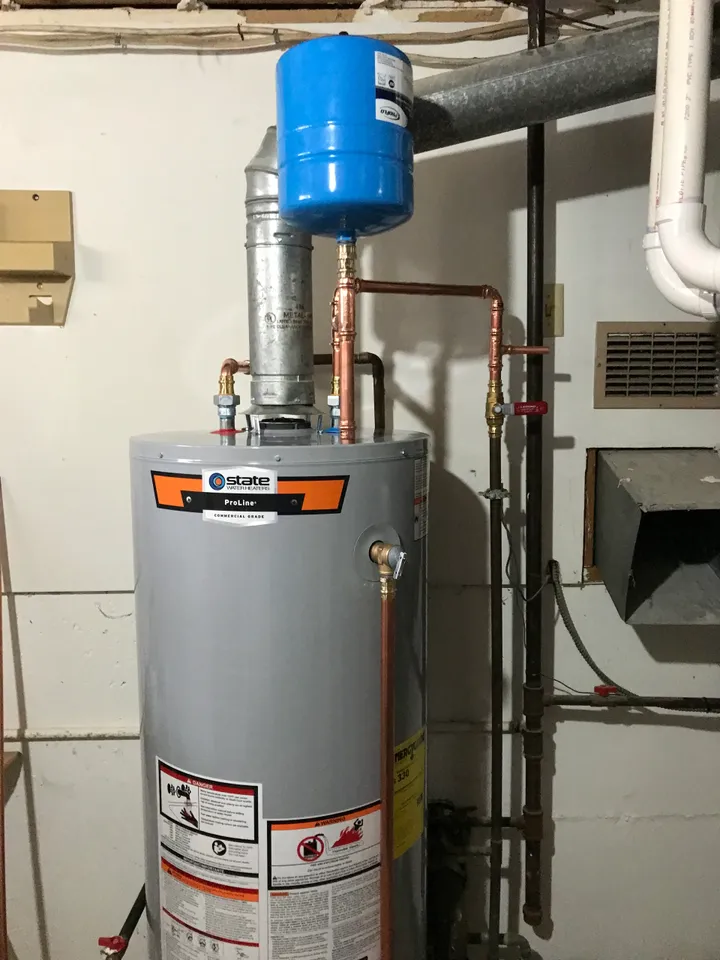

How Long Does a Water Heater Last?
Most water heaters last between 8 and 12 years, though the real number depends on the type of unit, your water quality, and how well it's been maintained. Tankless units commonly stretch to 15–20 years, while gas and electric tank models tend to land in that 8–12 year window — sometimes shorter here in Columbus because of our moderately hard water.
Key Takeaways
- Tank water heaters last 8–12 years on average. Tankless units typically run 15–20 years with proper maintenance.
- Gas and electric tank heaters have similar lifespans, but electric units have heating elements that often need replacing every 6–10 years.
- Hard water is the #1 lifespan killer in Central Ohio — sediment buildup destroys tanks and elements faster than almost anything else.
- An annual flush and an anode rod check every 3–5 years can add years of service to a tank water heater.
If you're standing in front of your water heater wondering whether it's about to die on you — or you just bought a house and have no idea how old that thing in the basement is — you're asking the right question. Most water heaters last 8–12 years, and after about year 10, you're on borrowed time.
I'm Evangelynn Hughes, a licensed plumber with Shorty's Plumbing here in Columbus, Ohio. I've replaced more water heaters than I can count over the years — in older homes in Clintonville and Bexley, in newer builds out in Powell and Pickerington, and in just about every neighborhood in between. The honest truth is that "how long does a water heater last" doesn't have one clean answer. It depends on what you bought, what's in your water, and whether anyone has ever flushed the tank. Below, I'll walk you through what I actually see in the field — not what a manufacturer's brochure says.
How Long Do Gas Water Heaters Last?
Gas water heaters typically last 8 to 12 years, with most failing somewhere around year 10. The lifespan comes down to the tank itself — once the steel tank starts to corrode from the inside, there's no fixing it.
What kills a gas water heater early
The two biggest killers I see on service calls are sediment buildup and a neglected anode rod. Sediment settles at the bottom of the tank, sits right above the burner, and basically cooks itself into a hard crust that strains the unit and accelerates corrosion. The anode rod — that "sacrificial" metal rod inside the tank — is supposed to corrode instead of your tank walls, but once it's used up, the tank starts rusting from the inside out.
What a well-maintained gas unit looks like
I've pulled gas heaters out of Columbus homes that were 15 or 16 years old and still running. Every single one had two things in common: the homeowner was flushing the tank yearly, and the anode rod had been replaced at least once. According to The Home Depot's guidance on water heater replacement, unit lifespan varies considerably with installation quality, water conditions, and maintenance — and that matches what I see every week.
"I tell every customer the same thing: a $150 maintenance visit can buy you three or four extra years out of a tank. That's the cheapest hot water you'll ever get." — Evangelynn Hughes
How Long Does an Electric Water Heater Last?
Electric water heaters last about the same as gas — 8 to 12 years on average, sometimes longer. The tank fails for the same reasons (corrosion, sediment), but the wear-and-tear pattern looks different because there's no burner underneath.
Electric tanks vs. heating elements — two different timelines
This is where people get confused. The tank lasts 8–12 years, but the heating elements inside an electric water heater are a separate, replaceable part. Most electric tanks have two elements (an upper and a lower one), and they don't last as long as the tank itself.
How long do water heater elements last?
Heating elements typically last 6 to 10 years, though hard water and sediment can shorten that significantly. The lower element almost always burns out first, because that's where sediment settles. The good news: replacing an element is a repair, not a replacement of the whole unit. If your electric heater suddenly takes forever to recover hot water — or you're getting lukewarm showers — there's a decent chance one of the elements is shot, not the whole heater.
I had a customer in Westerville last winter swear up and down that her 7-year-old electric heater was finished. It was a $180 element swap. She's still using it.
How Long Do Tankless Water Heaters Last?
Tankless water heaters typically last 15 to 20 years, often outlasting two tank-style units. There's no tank to corrode and no sediment pooling at the bottom — that's where the longevity comes from.
The catch with tankless units
The tradeoff is maintenance sensitivity. Tankless heaters need to be descaled — usually every year in Columbus — because mineral buildup inside the heat exchanger absolutely will shorten the unit's life and void most warranties. Skip the descaling for a few years and you can lose half the lifespan.
When tankless makes sense (and when it doesn't)
Tankless is a real upgrade for the right household — smaller homes, energy-conscious owners, people who hate running out of hot water. If you've got a four-bathroom house with teenagers who all shower at 7 a.m., you'll need a properly sized unit (or two) to keep up. Rheem's overview of long-term hot water options walks through some of the durability differences between tank styles, and it's worth a read if you're weighing your options.
What Affects the Life Expectancy of a Water Heater?
The expected life of a water heater depends on five main factors: water quality, maintenance, installation quality, usage patterns, and the unit itself. In Columbus specifically, water quality is the one I'd rank #1.
Water quality (hard water is the silent killer)
Columbus has moderately hard water — not the worst in the country, but hard enough to leave scale on your fixtures and accelerate sediment in your tank. I've seen 6-year-old tanks from homes without a softener look worse inside than 12-year-old tanks from softened homes. If you're on a private well in places like Plain City or out toward Marysville, the situation can be even tougher on equipment.
Maintenance habits
Annual flushing and an anode rod inspection every 3–5 years are the two highest-ROI things a homeowner can do. Lowe's water heater replacement guide confirms what we see in the field — the average lifespan of a water heater swings dramatically based on whether routine maintenance actually happens.
Installation quality
A bad install will shave years off any unit. Improper venting, the wrong size, no expansion tank where one's required by code, sloppy gas connections — I've replaced units that were "new" five years ago and already shot because they were never installed right. Ohio requires a permit for most water heater replacements, and there's a real reason for it.
Usage and household size
A water heater serving a family of six runs a lot harder than one serving a couple in a condo. More cycles equals more wear on the tank, the elements, and every seal in the system.
"I always check the date sticker before I do anything else. If a unit's past 10 years and acting up, I'd rather have an honest conversation than charge someone $500 to repair a tank that's going to leak in eight months anyway." — Evangelynn Hughes
How Do I Know My Water Heater Is About to Fail?
Most water heaters give you warning signs before they fail completely — you just have to know what to look for. The big four are rust-colored hot water, rumbling or popping noises, water pooling around the base, and inconsistent temperatures.
Rusty or discolored hot water
If your hot water comes out tinted brown, orange, or red — and the cold water runs clear — the tank is rusting from the inside. That's not a repairable issue. At that point you're shopping for a replacement.
Rumbling, popping, or banging noises
Those sounds are sediment moving around or trapped water bubbling underneath a hardened layer of mineral deposit. A flush sometimes fixes it. If it doesn't, you're hearing the unit work way too hard, and it's not going to last much longer.
Puddles or moisture around the base
A leak from the tank itself is the end of the road — water heater tanks aren't designed to be patched. If you're seeing water on the floor around your unit, get it looked at immediately. A failed tank in a finished basement can cause five-figure damage in a few hours.
You don't know how old it is
If you've just moved into an older Columbus home and you have no idea how old your water heater is, check the serial number on the manufacturer label. Most brands encode the manufacture date in the first four characters. If it's pushing 10+ years and you're seeing any other signs, it's time to start planning. You can always reach out to our team for honest water heater repair and replacement help in Columbus if you want a real set of eyes on it.
How Can I Make My Water Heater Last Longer?
You can add 2–5 years to your water heater's life with a handful of simple maintenance habits. None of this is glamorous, but it works.
Flush the tank annually
Drain the tank once a year to clear sediment. In Columbus, with our water hardness, I'd actually recommend twice a year if you don't have a softener. This is the single most impactful thing you can do.
Check the anode rod every 3–5 years
The anode rod is your tank's first line of defense against corrosion. When it's used up, the tank itself starts corroding. A new rod runs about $30–50 in parts. It's the cheapest insurance policy in the house.
Install a water softener if you don't have one
Hard water shortens water heater life. A softener pays for itself across the lifespan of the appliances it protects — water heater, dishwasher, washing machine, faucets.
"Out of every customer I've ever seen get 15+ years out of a tank water heater, every single one had a water softener. There's a pattern there, and it's not a coincidence." — Evangelynn Hughes
Set the temperature reasonably
120°F is the sweet spot — hot enough to be safe (Legionella concerns drop off above that point) and cool enough to reduce strain on the tank, the elements, and the anode rod. Cranking it to 140°F because someone's complaining about lukewarm showers usually just kills the unit faster.
FAQ: Water Heater Lifespan Questions Columbus Homeowners Ask
How long does a hot water tank last in Columbus, Ohio?
A standard hot water tank lasts 8–12 years in Columbus, on the lower end of that range without softened water. Our moderately hard water accelerates sediment buildup, which is why annual flushing matters more here than it does in places with softer municipal water.
What is the average lifespan of a water heater?
The average lifespan of a water heater is 8–12 years for tank-style units (gas or electric) and 15–20 years for tankless models. Solar and hybrid heat-pump units typically fall somewhere in between.
Should I replace a 15-year-old water heater?
Yes, in most cases. A 15-year-old tank water heater is past its expected lifespan and the risk of a sudden tank failure — and the water damage that comes with it — is high. Even if it's still running, replacing it on your schedule is far cheaper than replacing it on its schedule.
How long do water heater elements last in an electric unit?
Heating elements last about 6–10 years. The lower element tends to fail before the upper one because of sediment. Replacing an element is a repair, not a full unit replacement, and is usually well worth doing on a tank that's still under 10 years old.
Is it cheaper to repair or replace a water heater?
Repair makes sense if the unit is under 8 years old and the issue is a known repairable part — element, thermostat, pressure relief valve, or a fitting leak. Replacement makes more sense if the tank itself is leaking, the unit is 10+ years old, or the cost of the repair is more than half of replacement.
So — how long does a water heater last? Plan on 8–12 years for a tank-style gas or electric unit and 15–20 years for a tankless one, knowing that Columbus water quality, maintenance habits, and install quality can shift those numbers in either direction. The biggest takeaway from 20+ years of pulling old units out of Central Ohio basements: the homeowners who flush their tanks, replace their anode rods, and run a softener consistently get more years out of their equipment than the ones who don't. It's not magic — it's maintenance.
If your water heater is getting close to that 10-year mark, making weird noises, or you're just not sure how much life it has left, don't wait for a 6 a.m. cold shower or a flooded basement to make the call. Schedule an honest, no-pressure inspection with our team at Shorty's Plumbing — we'll tell you exactly what we'd do if it were our own house. You can request a quote or schedule water heater service online, or give us a call. We'd rather help you plan than help you panic.