


Tankless vs. Tank Water Heater: Which Is Right for Your Columbus Home?
Choosing between a tankless vs. tank water heater comes down to how your household uses hot water, what your home is already set up for, and how long you plan to stay put. Tankless units heat water on demand and last longer, while traditional tanks cost less upfront and are simpler to install. Below, I'll walk you through exactly how I help Central Ohio homeowners make this call every week.
Key Takeaways
- Tankless heats water on demand, lasts 15–20+ years, and saves space — but costs more to install (often $2,000–$4,500 for gas).
- Tank heaters cost less upfront ($600–$1,800 installed) and are simpler, but last 8–12 years and run out of hot water during heavy use.
- Gas vs. electric matters: gas tankless handles whole-home demand better; electric is cheaper and simpler but may need a panel upgrade.
- The right choice depends on your household size, hot water habits, and whether your home already has the gas line, venting, or electrical to support tankless.
If you're standing over a rusty, leaking water heater trying to decide what to replace it with, you're not alone — it's one of the most common questions I get from homeowners across Columbus. The short answer: a tankless vs. tank water heater decision isn't about which one is "better" on paper, it's about which one fits your home and how your family lives. I'm Evangelynn Hughes, and after years of installing and repairing both types in Central Ohio homes, I've seen tankless units transform a busy household's mornings — and I've seen them installed in homes that never needed one. My goal here is to give you the honest, experience-based breakdown I'd give a neighbor, so you can spend your money once and spend it well.
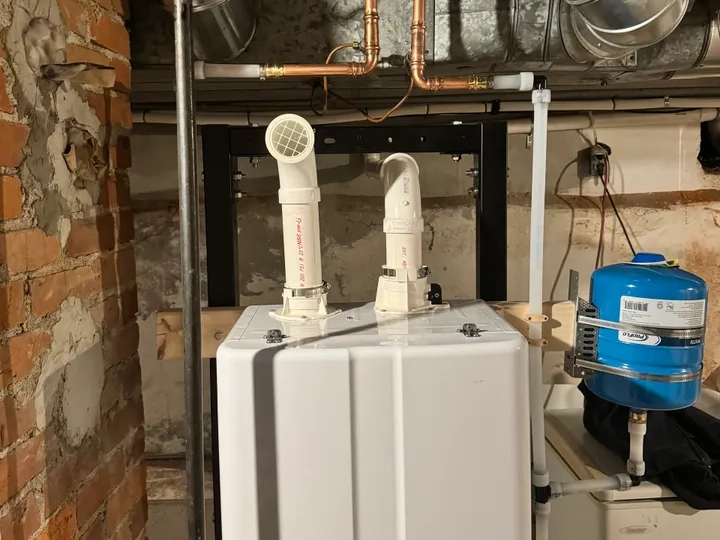
How does a tankless water heater work?
A tankless water heater heats water only when you turn on a hot tap, instead of keeping a big tank of water hot around the clock. When you open a faucet, cold water runs through the unit, a gas burner or electric element fires up, and it heats the water instantly as it passes through. That's why you'll hear them called "on-demand" or "instantaneous" heaters.
Tankless (on-demand) heating explained
The unit sits idle until it senses water flow, then heats the water in seconds and shuts off when you're done. Because there's no stored water waiting to cool down and reheat, you're not paying to keep 40 or 50 gallons hot all night. The U.S. Department of Energy points out that on-demand systems can be meaningfully more efficient than storage tanks for homes with moderate daily hot water use.
How a traditional tank works
A tank water heater keeps 40 to 80 gallons of water heated and ready in a storage cylinder. When you use hot water, cold water refills the tank and the burner or elements reheat it. It's simple and reliable, but it also reheats that water repeatedly whether you use it or not — and once the tank is drained during a big demand, you wait for it to recover.
The core difference that affects your daily life
The practical difference most families feel is this: a tank can run out, and a properly sized tankless won't. If you've ever been the last person to shower on a Sunday morning, you know the frustration of a drained tank. Manufacturers like A.O. Smith explain the on-demand process well if you want to see the mechanics in more detail.
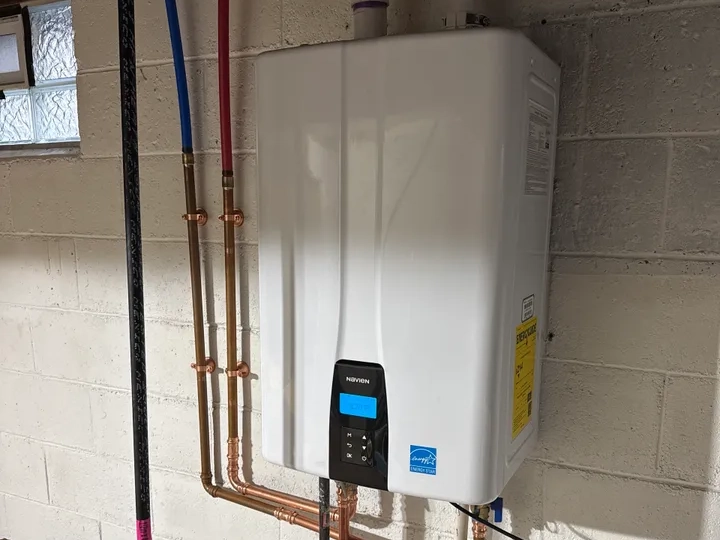
What's the real difference between a tankless vs. tank water heater?
The real difference between a tankless vs. tank water heater comes down to four things: upfront cost, energy use, lifespan, and how much hot water you can get at once. Neither is universally "right" — each wins in different homes. Here's how I frame the trade-offs for clients.
Upfront cost and installation
Tank heaters win on upfront cost almost every time. A standard tank runs roughly $600–$1,800 installed, while a tankless install usually lands higher because of venting, gas-line, or electrical work. If your budget is tight and your current setup already fits a tank, that's a legitimate reason to stay with one.
Energy efficiency and monthly bills
Tankless heaters generally use less energy month to month because they don't reheat standing water. For a lot of Central Ohio homes, that shows up as a modest but real savings on the gas or electric bill over the year. The savings are biggest in households that don't use enormous amounts of hot water, where a tank would otherwise sit and reheat all day for little reason.
Space and lifespan
This is where tankless really pulls ahead. A tankless unit mounts on the wall and frees up the floor space a bulky tank hogs — a big deal in the tight utility closets I see in a lot of Columbus homes. It also lasts longer: I'll cover tankless water heater lifespan in detail below, but the short version is 15–20+ years versus 8–12 for a tank.
"In more than a decade of pulling old tanks out of Columbus basements, I've learned the right water heater isn't the fanciest one — it's the one that fits how your family actually uses hot water." — Evangelynn Hughes, Shorty's Plumbing
What are the pros and cons of a tankless water heater?
The main pros and cons of a tankless water heater are simple: you get endless hot water, lower energy use, and a longer lifespan, but you pay more upfront and sometimes need home upgrades to support it. When homeowners ask me to lay out the tankless water heater pros and cons, this is the honest list I give.
Tankless water heater benefits
The biggest tankless water heater benefits are endless hot water, energy savings, space savings, and longevity. You won't run out mid-shower, you free up floor space, and a well-maintained unit can outlast two tank heaters. For families who are tired of cold showers or who want to reclaim a corner of the basement, those benefits are genuinely life-improving.
The drawbacks I'm honest with clients about
The main drawbacks are higher upfront cost, potential upgrade requirements, and sensitivity to hard water. Central Ohio water is hard enough that mineral scale is a real factor, and a neglected tankless unit will underperform and age faster than it should. Some homes also need a bigger gas line or a dedicated electrical circuit before a tankless will even work correctly.
"Central Ohio water is hard enough that I tell every tankless customer the same thing: budget for an annual flush, or the unit won't live up to the lifespan you paid for." — Evangelynn Hughes, Shorty's Plumbing
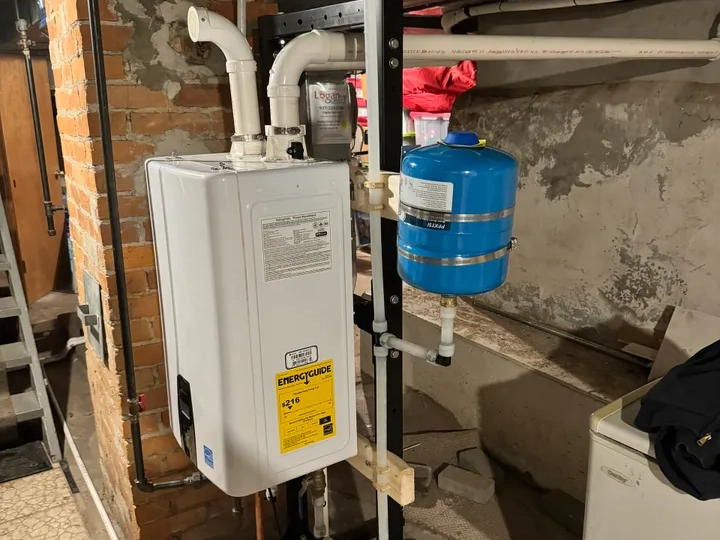
Should you choose a gas versus electric tankless water heater?
Choosing between a gas versus electric tankless water heater depends on your home's fuel setup and how much hot water you need at once. Gas units handle higher demand and suit larger households, while electric units are cheaper, simpler, and better for smaller homes or specific fixtures. I help homeowners weigh this during every water heater consultation in Columbus.
Gas tankless
Gas tankless heaters deliver higher flow rates, which makes them the go-to for whole-home use in a busy household. The trade-off is a more involved installation — they need proper venting and often a larger gas line, which adds to the cost. For a family of four or more running multiple fixtures at once, gas is usually the right call.
Electric tankless
Electric tankless heaters are simpler and less expensive to install, with no venting required. The catch is that whole-home electric units can demand a serious amount of power, sometimes requiring an electrical panel upgrade in older Columbus homes. They're an excellent fit for smaller households, additions, or point-of-use spots like a far-off bathroom.
What about a tankless vs. heat pump water heater?
A tankless vs. heat pump water heater comparison is worth having if efficiency is your top priority. Heat pump water heaters are extremely efficient but still use a tank and need warm, open space to pull heat from the air — which not every basement offers. I bring this option up when a homeowner cares most about the lowest possible operating cost and has the right space for it.
How much does it cost to install a tankless water heater?
Installing a tankless water heater typically costs between $1,200 and $4,500 in the Columbus area, depending on fuel type and what your home needs. Electric units often land on the lower end, while gas condensing units with venting and gas-line work sit higher. The unit itself is usually less than half the total — the rest is labor, venting, and any upgrades.
What drives the price up
The biggest cost drivers are gas-line upsizing, venting, electrical panel upgrades, and permits. If your home already has an adequate gas line and a good spot to vent, you'll pay less. If we're converting from a tank and the infrastructure needs work, that's where the price climbs — and it's exactly why I never quote a tankless job sight-unseen.
Are tankless water heaters worth it?
Tankless water heaters are worth it for most homeowners who plan to stay in their home five or more years and value efficiency, space, and endless hot water. Over a 15–20 year lifespan, the lower operating cost and longer service life often offset the higher upfront price. For someone planning to move soon or on a tight budget with a working tank setup, it may not pencil out — and I'll tell you that straight.
"The homeowners who regret going tankless are almost always the ones who bought on price alone and skipped the gas-line or venting upgrade their house actually needed." — Evangelynn Hughes, Shorty's Plumbing
What size tankless water heater do I need?
The size of tankless water heater you need is measured in gallons per minute (GPM) — you add up the flow of every hot water fixture you might run at once. A shower plus a kitchen faucet, for example, might need around 4–5 GPM. Undersize it and you'll get lukewarm water during peak use; oversize it and you overpay.
Understanding GPM
GPM tells you how much hot water the unit can deliver at the same time, and it's the single most important number in sizing. I walk homeowners through their real usage — how many bathrooms, whether laundry and showers overlap — instead of guessing. That's how you avoid the "lukewarm at 7 a.m." problem I get called out to fix.
Why Ohio winters change the math
Here's an original insight national guides miss: incoming water temperature matters, and Ohio's cold winters lower it significantly. A tankless unit has to work harder to raise 40-degree winter groundwater to a comfortable shower temperature than it does in summer, which effectively reduces its usable GPM. That's why I size for winter performance, not the spec-sheet best case — a detail our Columbus water heater team builds into every recommendation.
Frequently Asked Questions
How long does a tankless water heater last?
A tankless water heater typically lasts 15–20 years or more with proper maintenance, compared to 8–12 years for a traditional tank. Annual flushing to manage Central Ohio's hard-water scale is the single biggest factor in reaching the high end of that range.
Do tankless water heaters really save money?
Tankless water heaters usually lower monthly energy bills because they don't reheat standing water, though the savings vary by household. The bigger financial win for most homeowners is the longer lifespan, which spreads the cost over more years.
Can a tankless water heater keep up with a big family?
Yes, a properly sized gas tankless water heater can supply a large household running multiple fixtures at once. The key word is "sized" — an undersized unit is the most common cause of the cold-water complaints I get called about.
Does a tankless water heater need electricity to run?
Yes, even gas tankless water heaters need electricity to power the ignition and controls, so they won't run during a power outage without a backup. This surprises a lot of homeowners, so it's worth factoring in if outages are common in your area.
How does a tankless water heater compare to a tank on hot water supply?
A tankless unit provides continuous hot water and won't run out, while a tank can be drained during heavy use and needs time to recover. Rheem offers a helpful overview of how tankless systems deliver continuous hot water if you want to dig deeper.
Conclusion: Making the Right Call for Your Home
At the end of the day, the tankless vs. tank water heater decision is about matching the system to your home, your habits, and your timeline. If you want endless hot water, lower energy use, and a unit that can last two decades — and your home can support it — tankless is a smart long-term investment. If you need a reliable, budget-friendly replacement and your current setup fits a tank, there's no shame in a quality tank heater either.
The most important thing is getting an honest, in-person assessment before you buy, because the wrong size or a skipped upgrade is what turns a great system into a frustrating one. If you're weighing your options in Central Ohio, the team at Shorty's Plumbing is happy to look at your home, talk through your hot water needs, and give you a straight recommendation. Schedule a water heater consultation in Columbus and let's find the right fit together — no pressure, just experienced advice.